An AI sustainability product for Accenture, showcased at Web Summit 2026
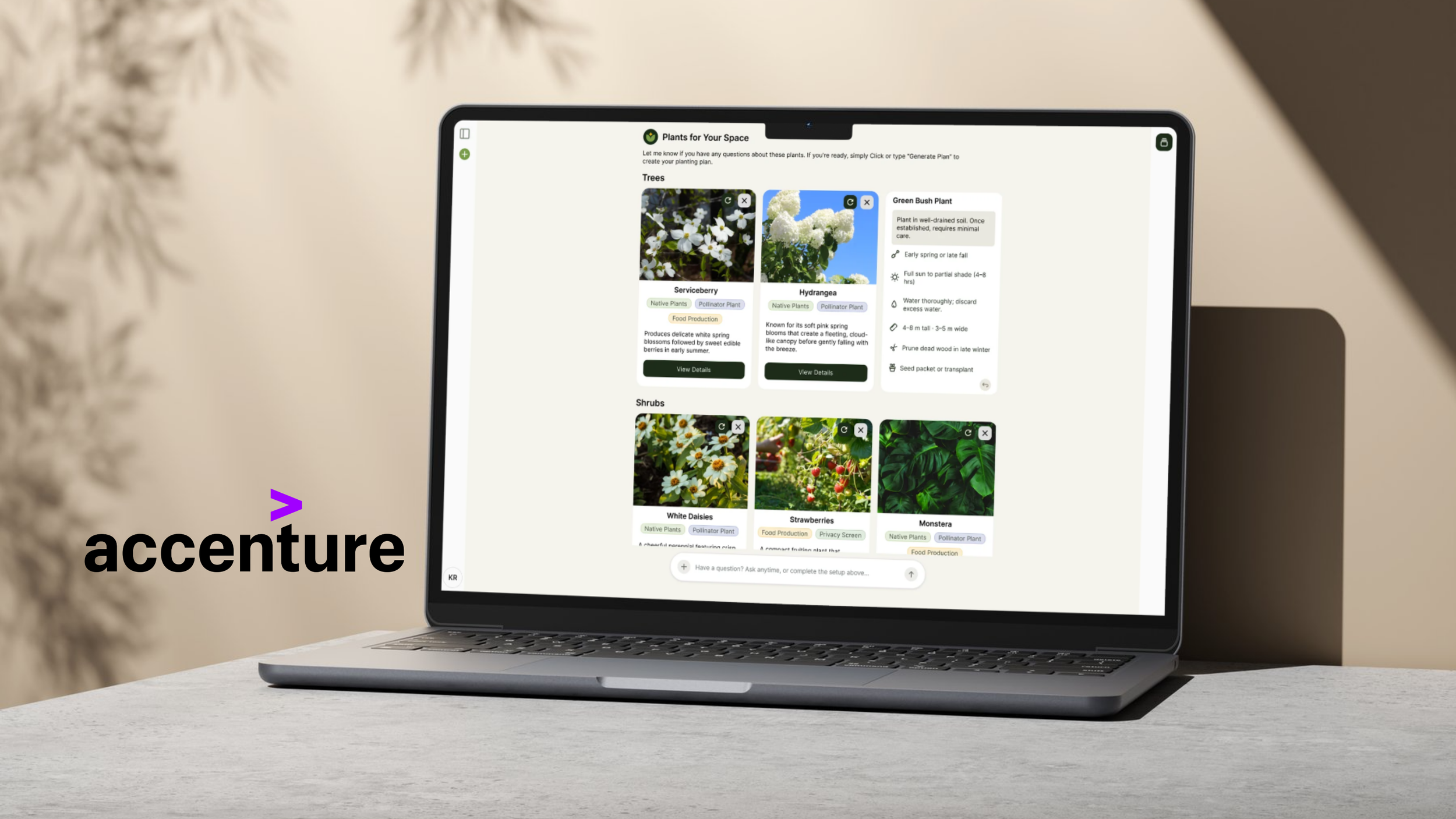
The AI needs precise garden data. The user doesn't have it.
ROLE
Lead Product Designer
Team
7-person cross-functional team
Timeline
January - April, 2026
Status
Shipped
As Lead Product Designer, I redesigned Wildlight’s site assessment into an AI conversation that helps beginners confidently plan their gardens.
I led the conversational assessment, the map-based measuring tool, onboarding, and the educational moments throughout. Accenture shipped it and continues to build on the foundation.
the bEFORE
Accenture’s Original Approach
Accenture's original concept placed the AI at the end. Users completed a detailed intake form first, then spoke with the AI to generate their plan.
THE FORM WAS FAILING BEFORE THE AI EVER SPOKE.
In testing the original flow, people stalled early. Sunlight hours, soil type, drainage. They guessed their way through, and every recommendation downstream was built on those guesses.
THE REDESIGN
An AI-First Experience
The AI now guides the assessment from the first interaction, helping users understand their garden while collecting everything needed to generate personalized recommendations.

The original experience assumed users already knew their garden: sunlight, soil, drainage, and site size.
But beginners open a gardening app because they don’t know those answers yet. A form can’t teach. A conversation can.
Why we committed to AI-first
So we replaced it with a conversation.
One question at a time, each one shaped by the last.

Generative research
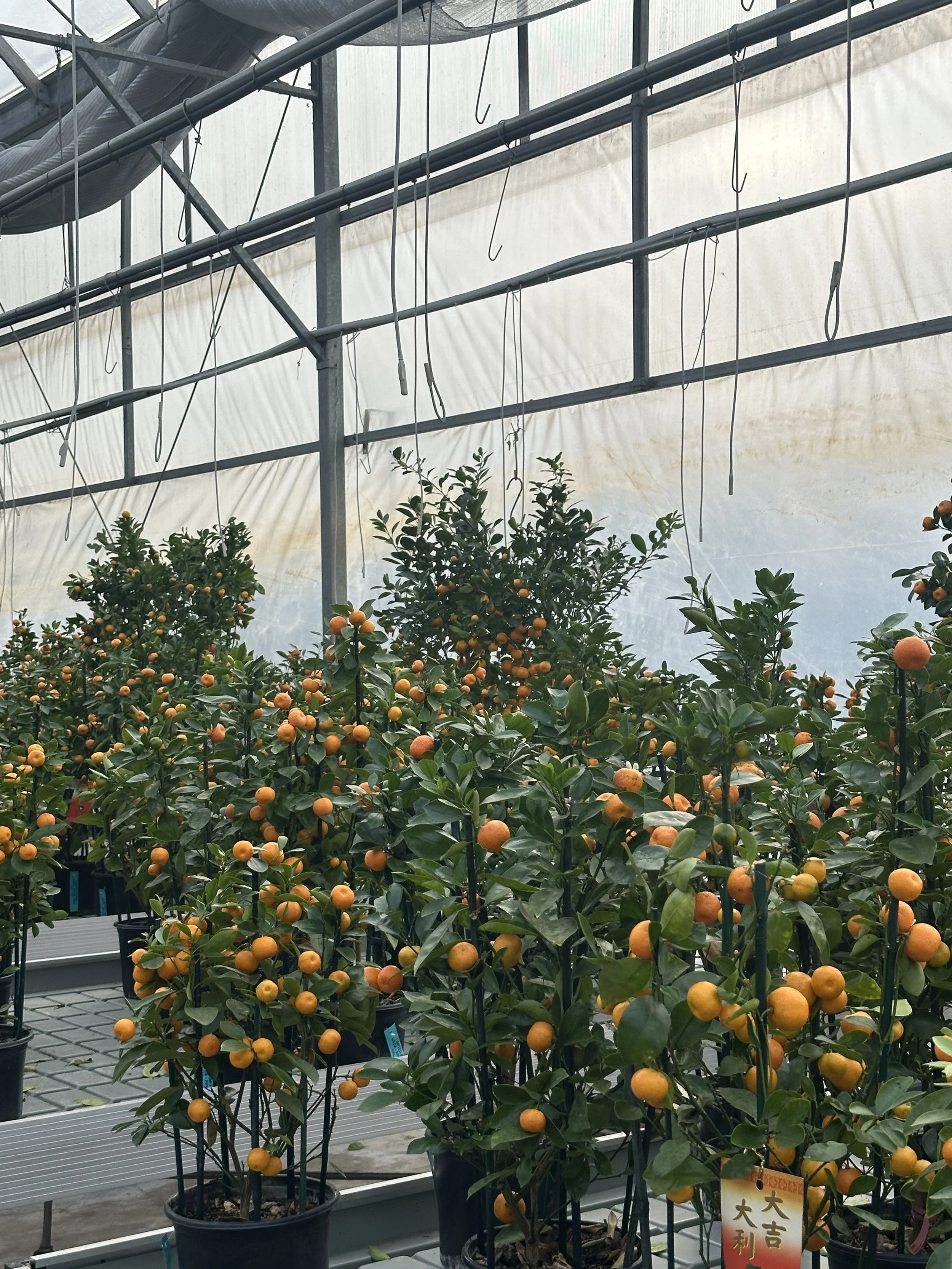
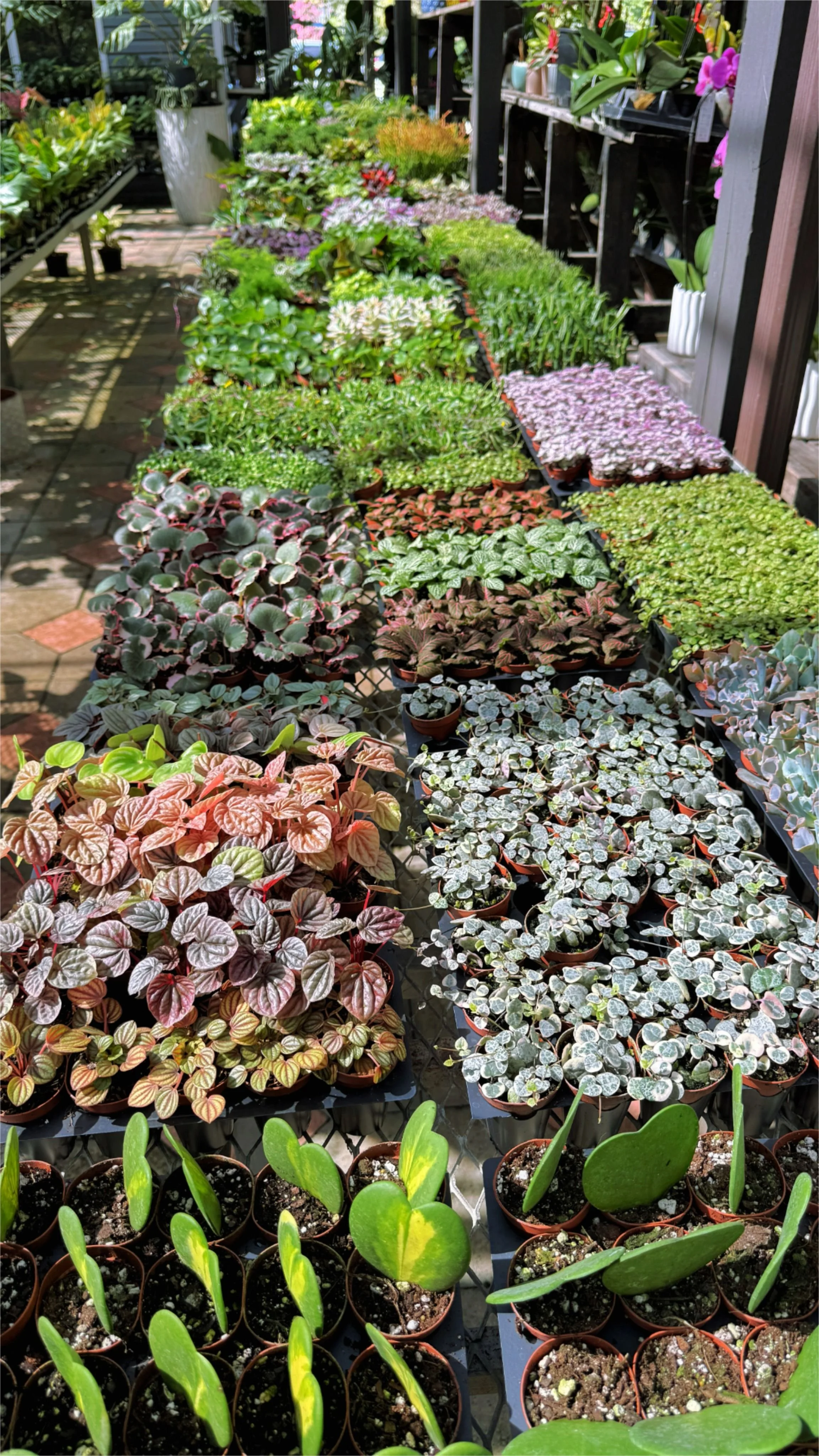
Rather than guessing what the AI should ask, we visited nurseries and greenhouses to observe how beginners chose plants, what information they looked for, and where they became confused.
We paired those observations with workshops with Accenture's subject matter expert, separating what beginners truly needed from what only experienced gardeners understand.
RESEARCHING REAL BEGINNERS
Translating research into structure
How The Site Assessment Works
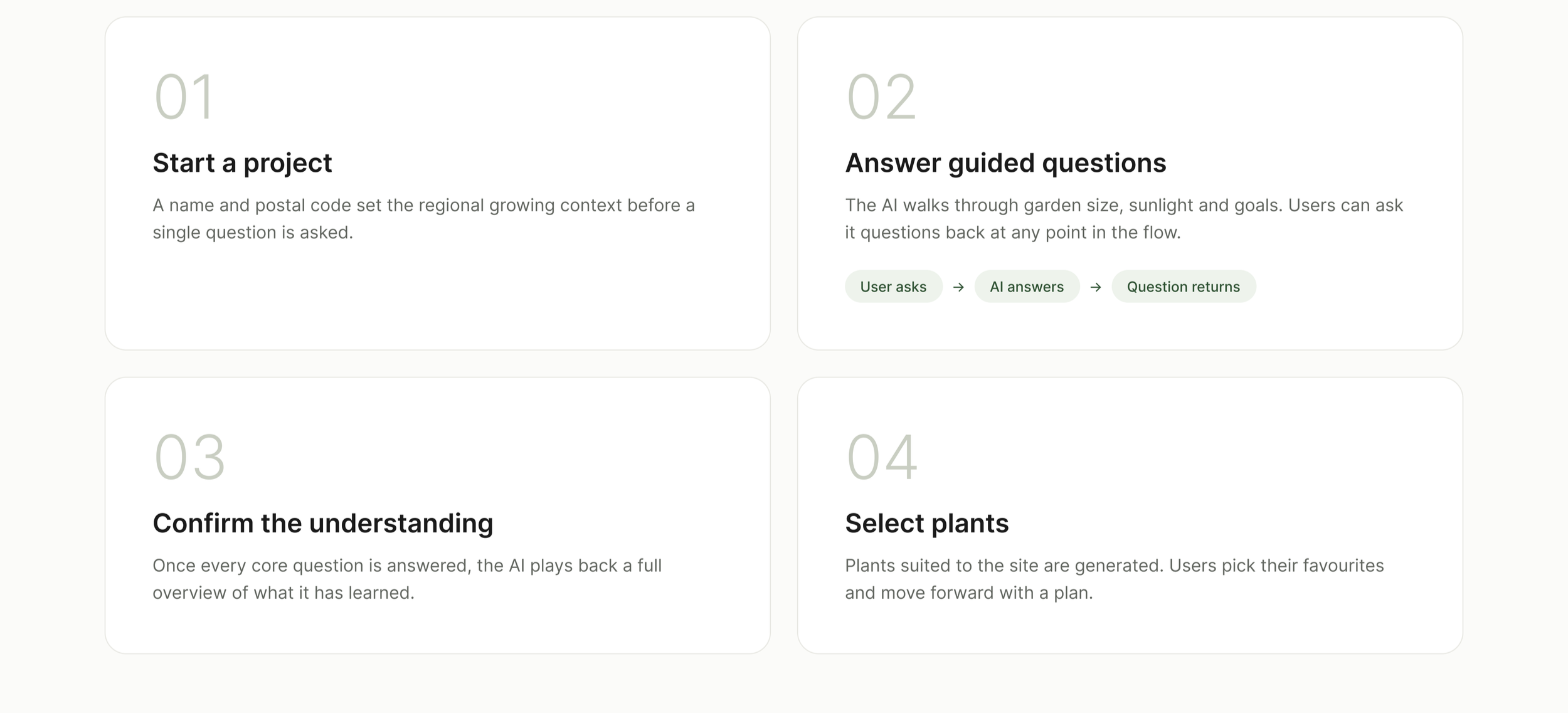
Each response shaped what the AI asked next. It explained unfamiliar concepts, remembered previous answers, and knew when it had enough to build the plan.
Usability testing

Testing the first build
We put the conversation in front of 20 people.
18 made it through on their own.
Moderated, think-aloud sessions, with us sitting beside each person.
What they said out loud is how we found the details that didn't work yet.
The flow was right.
The details weren't.
Three problems surfaced. Here's how I solved each.

01
Plant cards that actually tell you something
Testing made one thing clear beautiful cards weren't enough. People still didn't have the confidence to choose a plant.
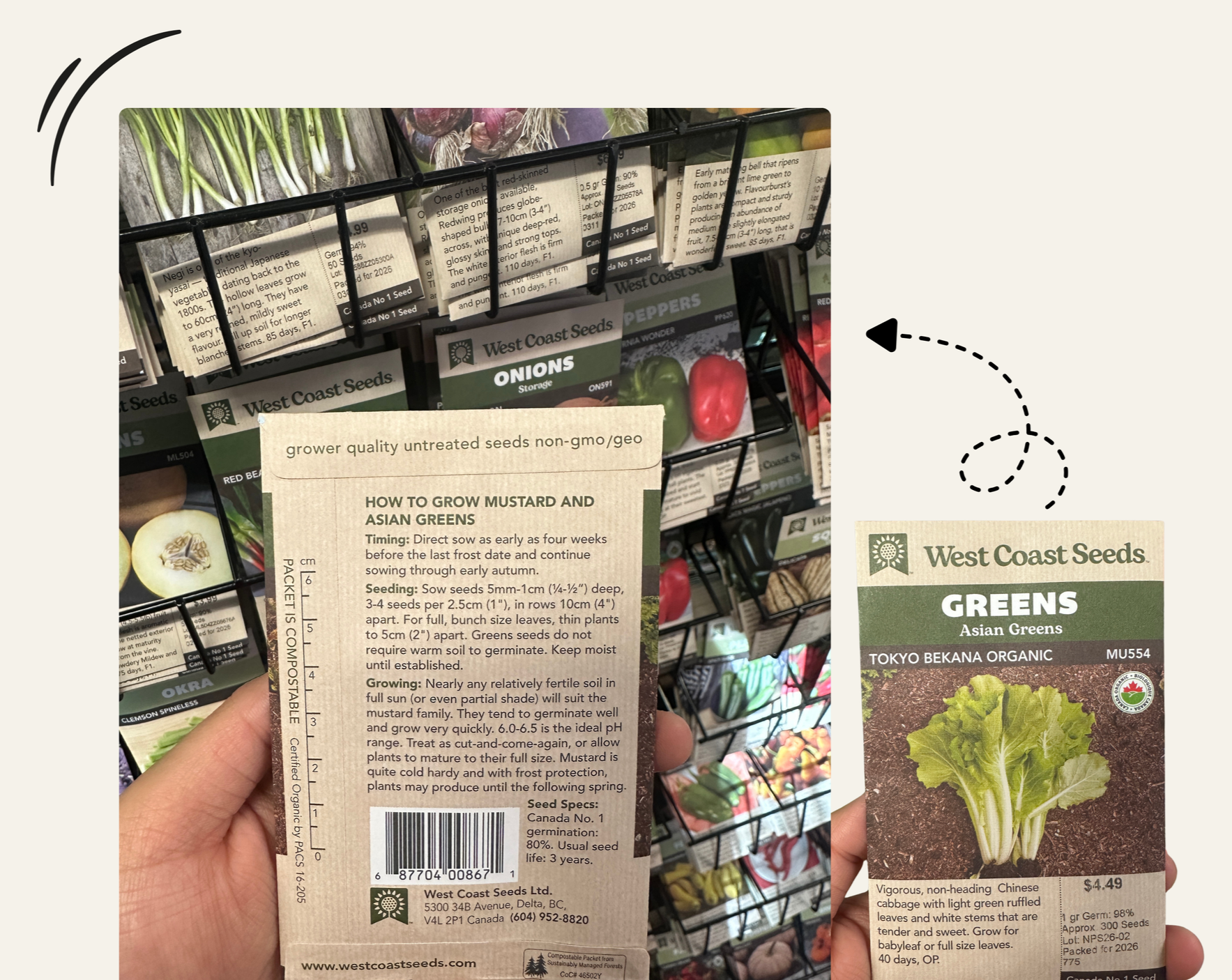
The answer was already in the nursery.
A seed packet puts the essentials on the front and the growing details on the back.
I brought that same pattern into the app: a scannable front for choosing, and a flip for everything else.
In the retest, people chose their plants without second-guessing.
02
Measuring without a measuring tape
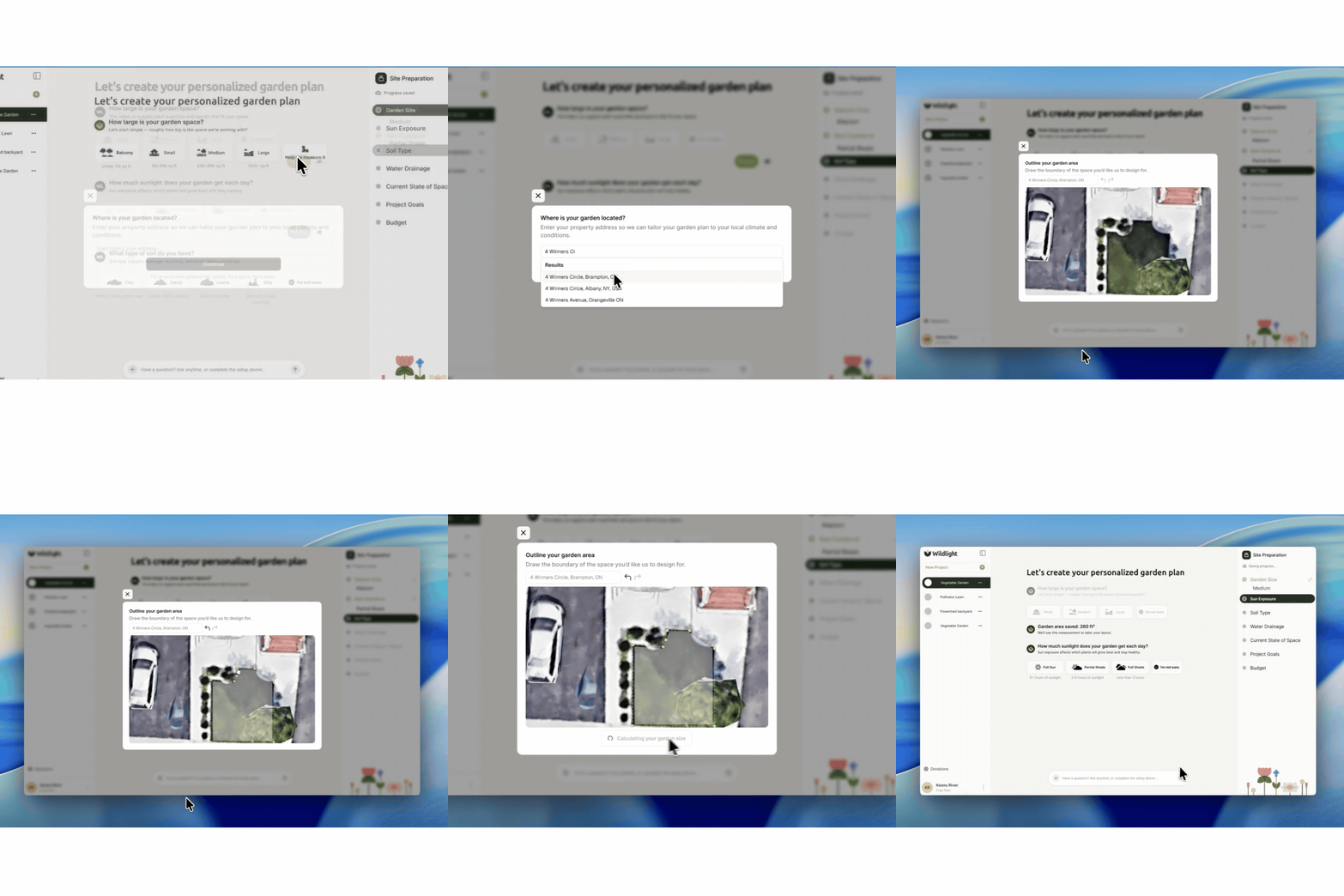
The assessment needed the garden's size, but almost no one can estimate square footage by eye.
So we didn't ask for a number. We let people draw one: trace your boundary on the map, and the system calculates the area for you.
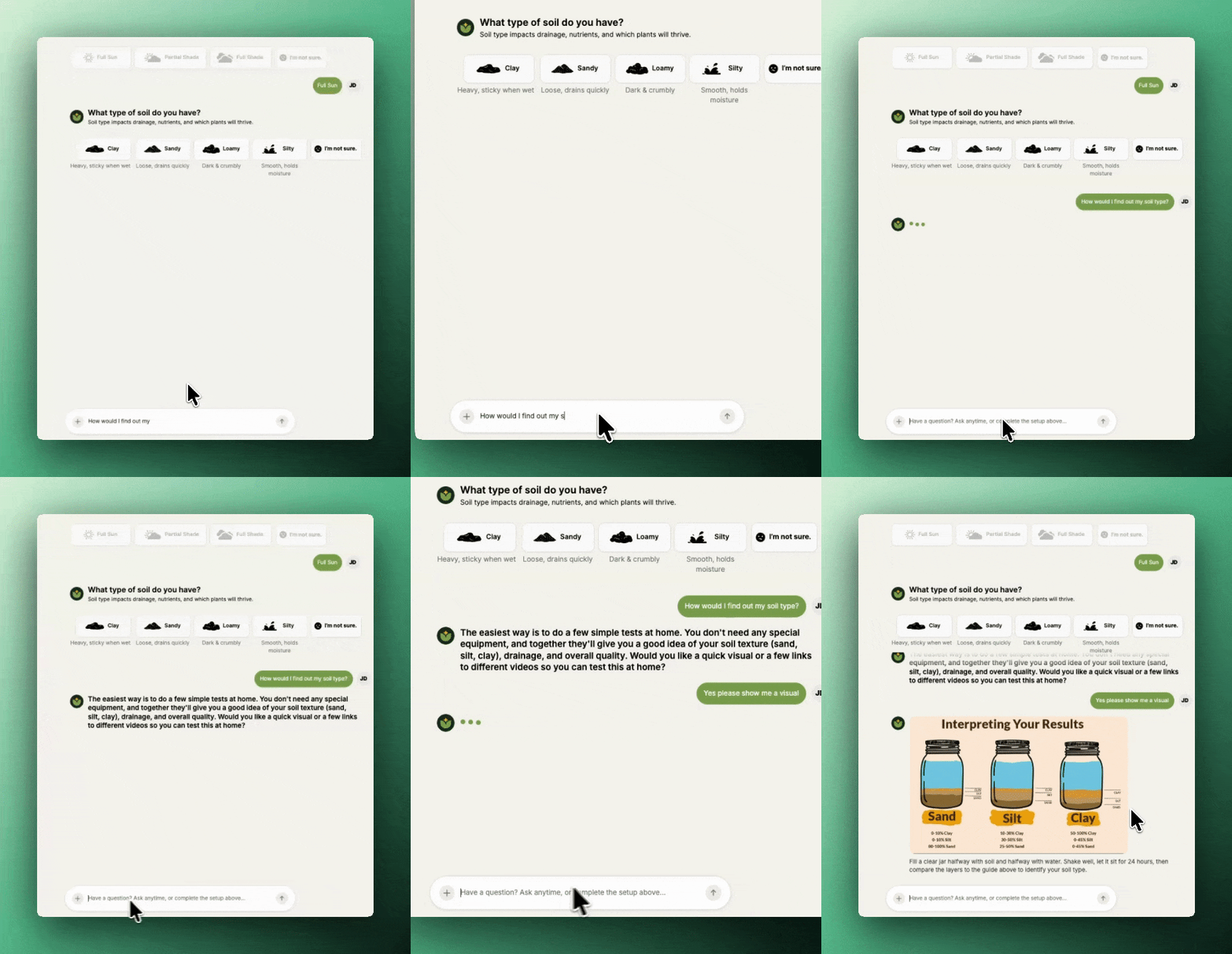
People guessed on questions like soil type, and one wrong guess throws off everything after it.
Here, you can just ask. The AI explains, shows a visual, and teaches you enough to answer honestly.
In the retest, people stopped guessing once they understood the question.
Questions should be answered, not blocked
03
Outcome
Shipped and showcased
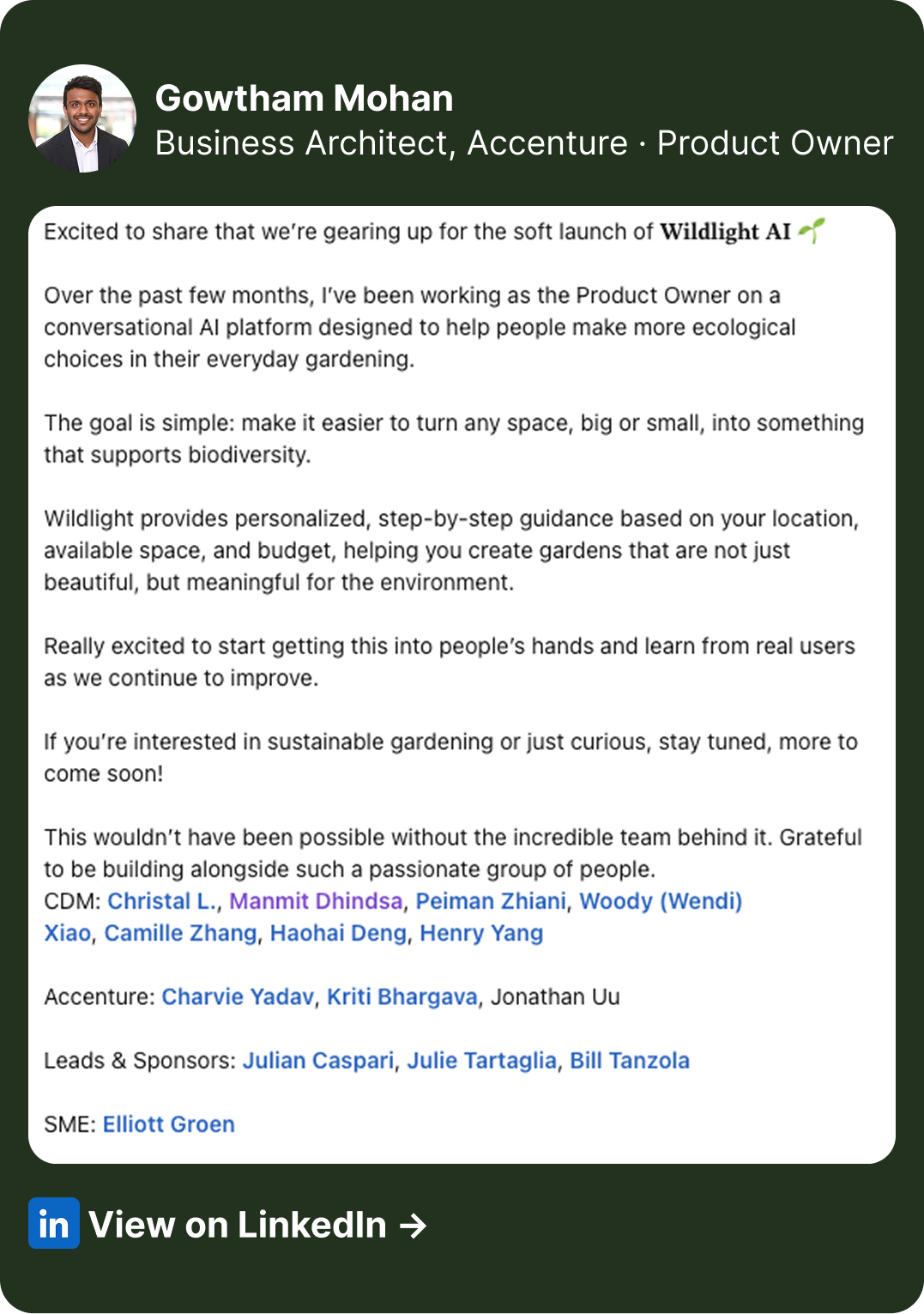
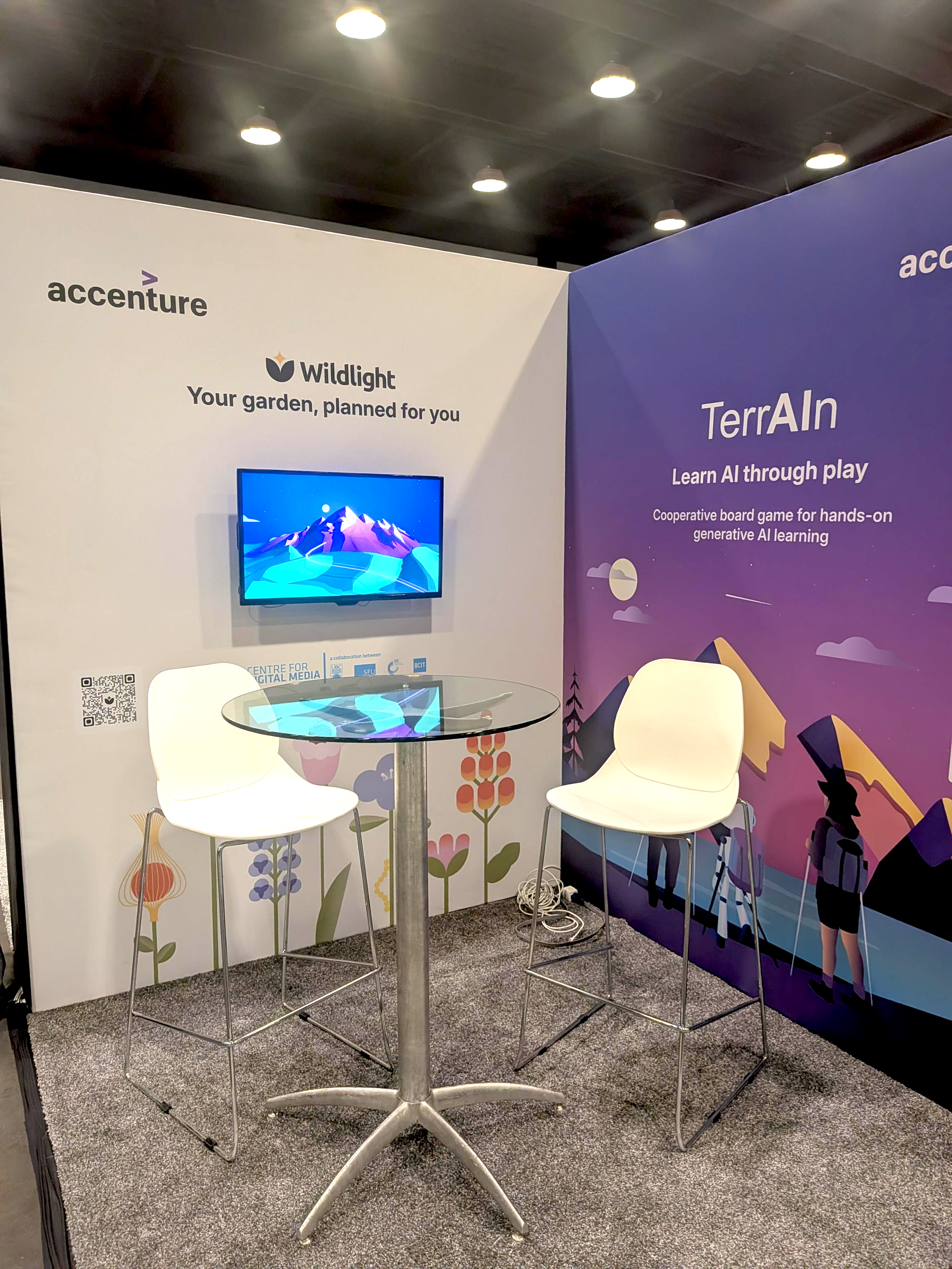
The AI-first assessment shipped as the core of Wildlight. Accentures team demoed it publicly at their Season of Impact event and at Web Summit 2026, it has also been pitched to major retailers including Home Depot. Accenture continues to build on the foundation we designed.
The sharpest design decision in this project didn't come from a screen. It came from standing in a greenhouse, watching how people read a plant tag. When the product felt stuck, the answer was to go look at how the real world had already solved the same problem — and translate it, rather than invent something new.
What this taught me